

A water footprint is the total amount of freshwater used to produce all the goods and services we consume daily. This includes the water used for growing food, generating electricity, manufacturing products, laundering clothes, etc.
Read More
A water footprint is the total amount of freshwater used to produce all the goods and services we consume daily. This includes the water used for growing food, generating electricity, manufacturing products, laundering clothes, etc.
Read More
If you’re a science teacher, chances are you’ve heard of citizenscience.gov. But if not, don’t worry; this blog post will give you all the information you need about this valuable resource for teaching scientific concepts in the classroom
Read More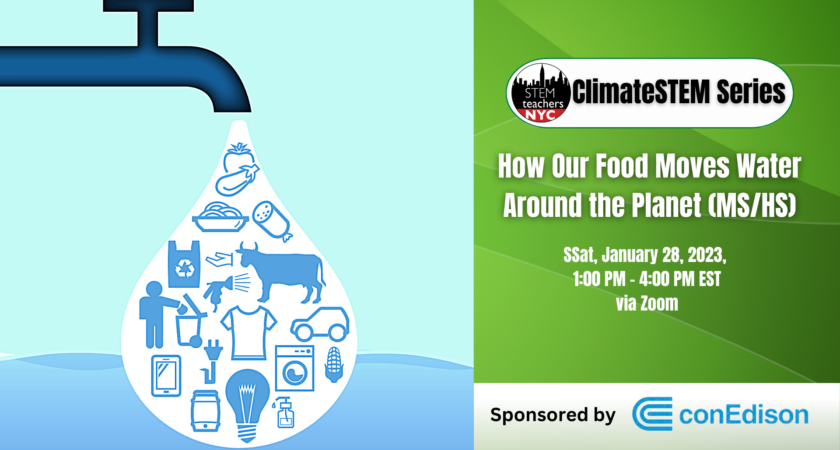
Learn about water use, scarcity and drought, in order to understand water the impacts on our local and global communities.
Read More
We will kick off the workshop having everyone engage in with a scientific phenomenon in student-mode. Participants will continue to work in student mode to generate noticings and wonderings as well as create models that attempt to explain what they have observed.
Read More
Do you want to learn more about teaching in the classroom? Are you looking for a way to collaborate with other educators and share best practices? Look no further than STEMteachersNYC Working Groups!
Read More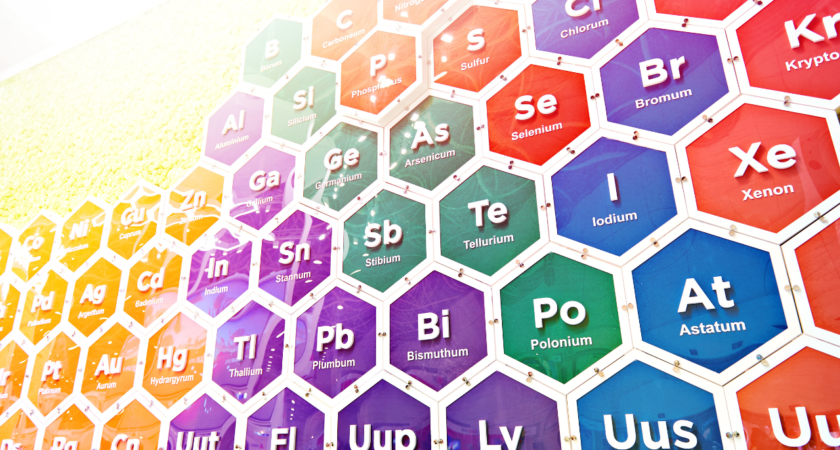
For science teachers, teaching the periodic table can be a daunting task. It’s complex and full of information that is often seen as simultaneously simplistic and intimidating.
Read More